Ghipsy Hood: A Web Designer’s Review of This Retro Display Font
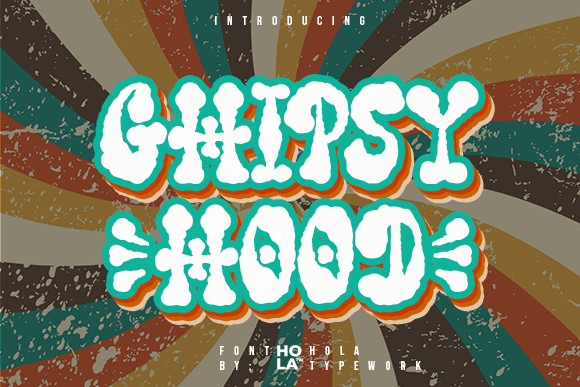
Last week, while building a landing page for a small-batch apothecary brand, I swapped the placeholder typeface with Ghipsy Hood and watched the entire mood shift. Suddenly the hero section felt alive—earthy, playful, and completely authentic. That moment reminded me why I keep coming back to this ruggedly retro and delightfully groovy font. Ghipsy Hood is a display font that doesn’t just sit on the screen; it speaks to the viewer with warmth and personality. As a web designer who regularly works with handmade sellers, printable creators, and Etsy shop owners, I’ve tested dozens of display fonts in real project environments. Here is my honest, hands-on review of how Ghipsy Hood performs across digital design work, from website headers to social media graphics and product mockups.
Ghipsy Hood for Website Hero Sections and Brand Headlines
Ghipsy Hood works beautifully as a display font for website hero sections, and I found that this retro typeface outperforms many other display fonts when it comes to capturing a free-spirited brand identity. The letterforms carry a handcrafted feel that immediately communicates authenticity—something that minimalist sans serif fonts often struggle to achieve. I tested Ghipsy Hood on a full-width hero banner for a mock botanical shop, pairing it with a soft background image of dried florals. The headline read “Wild + Free,” and the font’s groovy curves gave the phrase a sense of movement and joy. At large sizes, the details in each character become a focal point, drawing the eye and setting the emotional tone for the entire page. For web designers building brands that revolve around handmade goods, vintage aesthetics, or bohemian themes, Ghipsy Hood delivers exactly the kind of visual personality that makes visitors stop scrolling.
When I moved the same headline into a mobile-responsive preview, I was pleased to see that the font retained its charm even at smaller breakpoints. The thick strokes and open counters help with legibility on screens, which is a common concern with highly decorative display fonts. That said, I would reserve Ghipsy Hood for short, impactful lines rather than long navigation labels or dense body text. It thrives in hero titles, brand taglines, and section headers where you want to make a statement. For secondary text, I recommend pairing it with a clean sans serif font like Montserrat or Lato to maintain readability while preserving the retro energy.
How Ghipsy Hood Elevates Social Media Graphics and Pinterest Pins
For social media graphics, Ghipsy Hood serves as a standout display font that brings warmth to digital content, and I quickly realized this font deserved a permanent place alongside my other go-to display fonts. I used it to create a series of Instagram quote cards for a fictional crystal shop, with phrases like “Ground Your Energy” and “Slow Down, Wild One.” The font’s playful strokes made each post feel cohesive and on-brand without needing heavy illustration or complex layouts. On Pinterest, where visual appeal drives engagement, Ghipsy Hood performed exceptionally well in pin mockups. The retro vibe pairs naturally with earthy color palettes—terracotta, sage, mustard, and cream—which are consistently popular in the wellness and handmade niches. If you design social media templates for Etsy sellers or create digital printables for planners and wall art, this display font can become a signature element in your visual branding toolkit.
I also tested Ghipsy Hood in a video thumbnail for a YouTube tutorial about hand-lettering techniques. Even at thumbnail size, the font remained readable and retained its distinctive character. That is not something I can say for every display font I have used. The key is to keep the text short—ideally one to four words—so the font can shine without becoming crowded. For longer social media captions or blog post titles used in graphics, I suggest scaling down the font size slightly and adding generous letter spacing. This approach maintains the groovy aesthetic while improving legibility on smaller screens.
Ghipsy Hood in Digital Product Mockups and Etsy Listing Images
When creating digital product mockups, I turned to Ghipsy Hood as my primary display font, and this particular typeface proved far more versatile than many display fonts I have used in the past. I designed a series of mockups for a printable wall art set featuring motivational quotes. The font sat beautifully on canvas textures and paper backgrounds, giving each piece a hand-printed, artisan quality. For Etsy listing images, where standing out in a crowded search feed is critical, Ghipsy Hood adds a layer of visual interest that can help convert browsers into buyers. I layered the font over a flat-lay photo of dried herbs and linen, and the resulting image looked like it belonged in a boutique shop rather than a generic template. Small shop owners and printable creators will appreciate how little effort it takes to achieve a polished, cohesive brand look with this display font.
I also tested Ghipsy Hood on a mockup for a candle label, a product category that handmade sellers frequently ask me about. The font handled short phrases like “Lavender + Sage” and “Evening Ritual” beautifully at label scale. However, when I tried to include longer ingredient lists or small batch numbers, the decorative details made the text difficult to read at tiny sizes. For product labels, I recommend using Ghipsy Hood for the product name or brand tagline only, and pairing it with a simple sans serif font for the fine print. This combination gives you the best of both worlds: eye-catching branding and clear, compliant labeling. The same principle applies to tote bag designs, mug decals, and shirt graphics—use this font for the hero text, and let simpler typefaces handle the supporting details.
Readability and Screen Performance of Ghipsy Hood for Web Use
Testing Ghipsy Hood across various screen sizes confirmed that this display font maintains its character well, and I was pleased to find it more readable than many decorative display fonts. I loaded the font into a test website using Google Chrome, Safari, and Firefox, checking how it rendered on desktop monitors, tablets, and smartphones. At 48px and above, the font is crisp and fully legible, with no awkward spacing or broken curves. At 32px, it remains clear for short phrases. Below 24px, the decorative elements begin to compete with the letterforms, making longer words harder to parse. For web designers, this means Ghipsy Hood is best used for display purposes—headlines, call-to-action banners, hero text, and featured quotes. It is not suited for body copy, sidebars, footers, or any place where small text is required for extended reading. If you are designing an email header or a blog post title graphic, this font will perform beautifully. If you are writing a product description or a newsletter body, choose a simpler companion font instead.
Another note for web designers: Ghipsy Hood loads efficiently as a web font, and I did not experience any significant delay in rendering during my tests. For best performance, I recommend hosting the font locally or using a reliable CDN. If you are building a site for a client who sells handmade goods, consider using Ghipsy Hood for the main heading on the homepage and for category titles throughout the shop. This creates a consistent visual language that reinforces brand identity without overwhelming the user experience. For landing pages and sales pages, the font can be used in the hero area and again in a mid-page testimonial highlight to tie the design together.
Pairing Ghipsy Hood with Complementary Fonts for Web Projects
Pairing Ghipsy Hood with other fonts requires careful consideration, and as a display font, it works best when balanced with simpler typefaces rather than competing display fonts. In my tests, I paired Ghipsy Hood with three different font styles to see which combination felt most cohesive for web design. The first pairing was with a clean sans serif font, Open Sans. This combination worked well for blog layouts and product pages, where the sans serif handled body text and subheadings while Ghipsy Hood took the lead on main titles. The second pairing was with a subtle handwritten font, providing a softer, more organic feel that complemented the groovy retro energy. This duo worked beautifully for brands focused on wellness, nature, and handmade lifestyle. The third pairing was with a simple serif font for editorial-style sites that needed a touch of sophistication alongside the playfulness of Ghipsy Hood. All three pairings succeeded because Ghipsy Hood is distinctive enough to lead without overwhelming the design. Avoid pairing it with another highly decorative font, as the visual competition can confuse the viewer and reduce overall readability.
For practical use, I suggest limiting your palette to two fonts per project—one display font and one supporting typeface. This keeps the design clean and professional while allowing Ghipsy Hood to remain the star. I also recommend using different font weights and styles within the same family for the supporting typeface, so you have flexibility for captions, footnotes, and button text. If you are designing a complete brand identity for a handmade seller, this approach ensures consistency across their website, social media graphics, packaging mockups, and shop listings.
Commercial Licensing and File Formats for Web Designers Using Ghipsy Hood
Before adding Ghipsy Hood to my commercial projects, I reviewed the licensing for this display font and compared it with other fonts in my collection. For web designers and printable creators, understanding commercial licensing is essential to avoid legal issues down the road. Ghipsy Hood is available with a standard commercial license that covers most web and print applications, including website use, social media graphics, digital mockups, product packaging, and printable templates. If you plan to sell digital products that include the font—such as editable Canva templates, SVG-style designs, or planner pages—you need to check whether an extended license is required. The same applies to merchandise like mugs, shirts, tote bags, and signs where the font is a key design element. Always confirm the license terms before launching products, especially if you are selling on platforms like Etsy, Creative Market, or Amazon Handmade.
In terms of file formats, Ghipsy Hood typically includes OTF, TTF, and WOFF options, which cover desktop design software as well as web embedding. I tested the font in Adobe Illustrator, Canva, and Figma, and it installed smoothly across all three platforms. For web designers, the WOFF format is ideal for embedding, and the font’s file size is reasonable enough that it should not slow down page load times. If you are using Ghipsy Hood in a print-on-demand workflow, the OTF format gives you full access to any alternates or ligatures included with the font. I also recommend checking whether the font includes multilingual support if your client base or product audience requires accented characters. Overall, Ghipsy Hood is a reliable choice for commercial web design and product creation, provided you take a few minutes to verify the licensing details up front. For any handmade seller or printable creator looking to add a touch of rugged, free-spirited charm to their brand, this display font is well worth the investment.